Her mom departed before I could cry.
Change diapers, prepare bottles, schedule appointments. The one thing I couldn’t lose was employment. I started driving trucks at 19. Long or short, whatever pays. Suddenly, I wasn’t simply driving. And I was everything.
Her daycares said she was too young. Mom is too distant. When I said I was considering running with her, most people looked at me like I was crazy.
“Can’t raise a baby in a cab, mate.”
But what should I do? Quit and miss bills? Let someone else raise her while I planned weekend visits?
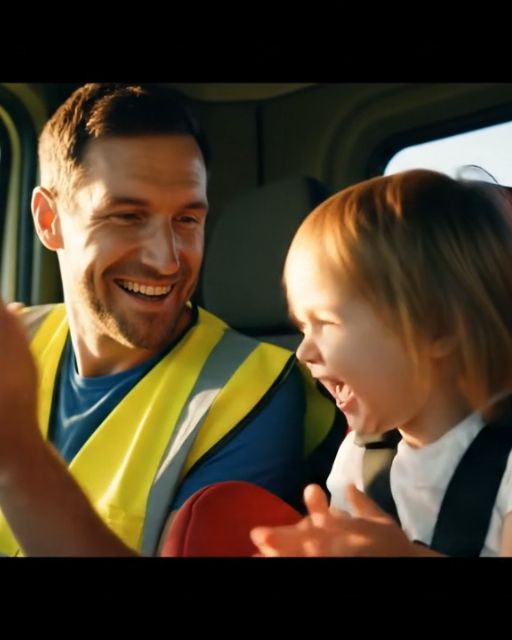
I got a top-rated car seat, baby-proofed the passenger side, and took my first load with her laughing in the mirror.
She enjoyed it.
She laughed at every road bump. Each weigh station was a unique experience. She cheered for every cow and fell asleep to the highway buzz like a lullaby.
My firm attempted to “talk” about it. Declared it non-standard protocol. Then something changed.
When we arrived at a customer pier, the foreman said, “That your little co-pilot?”
Nodding, I awaited judgment.
Instead, he grinned and replied, “You know…” My dad and I rode together.”
He gave me a folded note and said, “Give this to dispatch.” Avoid opening it here.”
I drove away after strapping her in.
When unfurled at a red light, the message made me tighten my hold on the wheel.
It was more than a message—it was an offer I never imagined.
The transfer was authorized. Regional route available. Every night home. Keep her close.”
At first, I assumed it was a joke. I’d driven long hauls for years, but regional drivers were different. Guys with seniority or a fancy name on their shirt frequently got them.
I phoned dispatch later that day, and they verified it.
“Foreman at McIntyre’s put in a good word,” he remarked. “Said you were always trustworthy. Want it or not?
I almost dropped the phone.
Every night home. That meant regular meals, a crib instead of a car seat, and perhaps bedtime reading instead of dashboard songs. Before he could reconsider, I answered yes.
In the following week, we moved into a rented trailer outside the depot. Not fancy—two rooms, leaking faucet—but ours. I decorated her bedroom with stars on the ceiling and plush animals on her cot.
She ignored the peeling wallpaper and broken screen door. She just cared about my nightly presence.
After a long period, I felt enough.
Not everyone understood.
I got side-eyes from neighbors. A single dad parenting a child? Who also drove trucks? I heard whispering. A woman inquired whether I was the babysitter.
I didn’t have time. I bought formula and sang goodnight tunes.
A tiny event at the grocery store one afternoon reminded me why it was worth it.
She cried after dropping her plush giraffe in the cereal aisle. An elderly lady grabbed it and delivered it to her before I could lean down.
She asked, “Your little girl?”
Expecting another remark, I nodded.
Instead, she grinned and remarked, “You’re doing good, dad.”
The end. These simple words struck me hard.
Weeks became months. I continued the regional route, improved her baby food, and read parenting blogs during breaks. Her first word in the cab—“truck”—had me laughing so hard I almost missed the exit.
Life does not go straight.
A letter arrived one morning. Absent return address. My name in handwriting I hadn’t seen in a year.
Her mom.
She wanted to meet. Declared she was “in a better place” and wanted to “talk things through.”
Not sure what to think. Some part of me felt infuriated. She left while I held a baby bottle and wiped tears from my shirt. She wanted back in?
Staring at the letter was lengthy. Then I decided.
We met at a neutral park. I brought baby. She smiled like a stranger at her mom, without knowing her.
Mom looked different. Maybe healthier. Clearer eyes. She sat on the seat near us and murmured, “I’m sorry.”
I said nothing. Rocked the stroller.
She said—therapy, treatment, regrets. I listened.
She then asked my fearful question.
“Can I see her more? Join her life?”
I delayed responding. I needed time to contemplate. For our daughter, not me.
I approached a lawyer and friends for guidance. I ultimately allowed monitored visits. Once weekly. A neutral zone.
It was hard. I thought I owed our kid to let her see both parents if she was trying.
But the path ahead was rough.
A few visits went nicely. Not so for others. She avoided calling after missing two. They sent flowers and an apology.
I had my guard up but didn’t close the door.
The depot called me Thursday.
“Hey, your name’s going around,” the manager remarked. Corporate wants to use one of our drivers in a safety promotion. Family-focused. Your tale arose.”
Nearly dropped my coffee.
I find a person with a camera following me about, taking shots of me and the baby at truck stops, rest areas, and the loading dock. She waved at everyone in a small “Future Trucker” vest.
Campaign went viral.
With the caption: “Some drivers carry more than freight—they carry family.” they shared a picture of her snoozing in her car seat holding a toy steering wheel.
Many messages arrived. From other single parents. From hell-stricken mothers. From those who needed to believe love exists even in truck cabs.
Then something unexpected occurred.
An envelope from the corporation came. A bonus check was inside. A large one. A handwritten note:
“For the driver who emphasized what matters.”
I gazed at the sum without blinking. It covered a home down payment. Maybe not a palace, but a house.
I discovered a spot. Near the depot, but with a backyard and front tree. I painted her room yellow, strung stars again, and made a swing set from scratch. After three weekends and bleeding knuckles, I did it.
It delighted her.
Running barefoot in the grass, she pointed at birds and giggled till she collapsed. I’d drink coffee on the porch and thought, We made it.
Mom continued visiting. Now more consistent. We talked—maybe never again as a couple. Shared parenting. Slowly, slowly.
I was stunned when my kid mentioned something on her third birthday.
She hopped into my lap, cake icing everywhere, looked me in the eye, and said, “I love our truck.”
Not “I love you” or “I love cake.” She adored our truck.
Meant something. That truck was more than a car to her. It was her first house. There we formed a family.
I realized something then.
Whether others thought it was insane didn’t matter. It didn’t matter whether we were imperfect. Our presence mattered. Every mile, night, embrace.
A few months later, a small community gathering invited me to speak. “Parenting on the road,” they said. I laughed first. Me? A speaker?
But I went.
I told them love doesn’t require a white picket fence. It may appear like glove box baby wipes and diesel engine lullabies.
People wept. A few embraced me after. One man approached me and said, “My wife left last month. I sleep in my vehicle. I felt I was unable. Maybe I can.”
I assured him, “If I can, you can.”
I meant it.
Several years later, here we are.
Her age is five. Kindergarten begins. Still claps at cows and enjoys highway noise. My trips are now limited to a few hours. Bedtime, skinned knees, storytime—I’m there.
She and her mother are improving. She occasionally brings her up from school, bakes cookies, and calls me while they create. We’re trying, but not flawless.
Trying was all this path was.
People thought I couldn’t work and raise her.
I didn’t simply keep working. Built a life.
I didn’t simply raise her. She also reared me.
Regardless of what you believe you can’t accomplish, let me tell you:
You can.
Even if rough. Despite misunderstandings.
Keep going.
Longest roads sometimes lead home.
Share this heartfelt tale with someone who needs hope today. Remember to like—you never know who may need to read this.