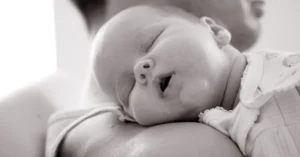
Emily held her newborn baby on the Langford estate’s stone stairs while it poured. Numb arms and trembling legs. Her broken and damaged heart almost knocked her down.
The massive mahogany doors closed behind her like a judgment.
She was married to Lucas Langford, son of one of Manhattan’s richest families, who announced his decision next to his expressionless parents moments before. “You’ve disgraced our name,” his mother sneered. “This baby was never planned.”
“It’s over, Emily,” Lucas said, ignoring her. Your items will be sent later. Just leave.”
Not even Emily could respond. Pulling her coat tightly over her tiny daughter burnt her throat with unshed tears. She gave up her goals, home, and freedom for Lucas. She was cast aside like a burden, like if she never existed.
Sophia, her daughter, cried gently. Emily gently rocked her and said, “It’s okay, baby. I got you. We’ll be fine.”
She entered the storm without money, umbrella, or destination. The Langfords didn’t call a taxi. She disappeared into the storm as they watched through velvet drapes.
Emily stayed in church basements and night buses for weeks. Pawned her jewels, preserving the wedding band last. She purchased Sophia formula with subway change from busking with her old violin.
But she never pleaded. Not once.
She discovered a modest Queens studio above a bodega. Emily’s eyes showed strength, so Mrs. Ramirez, a retired nurse, gave her a rent cut if she worked around the business.
Emily concurred.
The register was her day job. She painted at night using thrift-store brushes and canvas scraps. Sophia slept in a laundry basket with comfortable towels next to Emily’s easel.
Emily toughened despite tiredness. Every time her kid smiled, she fought harder.
At a Brooklyn weekend market three years later, everything changed.
A noted Soho gallery curator, Renee Caldwell, walked by Emily’s temporary stand. A series of spooky, bright artworks caught her attention.
“These yours?” she inquired.
Emily nodded uncertainly.
“They’re incredible,” Renee murmured. “Honest. Gripping. Poetic.”
Renee bought several works and encouraged Emily to contribute to a small group display that day. Emily almost declined since she had no childcare or clothes, but Mrs. Ramirez pushed, giving her a black wrap dress and watching Sophia.
That one night changed everything.
Emily’s story—abandoned wife, single mother, artist rising from ruin—swept New York’s art community. Her items sold. Commissions poured in. She appeared in publications, TV, and galleries.
She never boasted. She never retaliated.
But she remembered.
Emily stood in the Langford Cultural Foundation marble atrium five years after being kicked out into the rain.
The board changed when Lucas’s father died. They approached a young artist for a collaboration due to financial woes and relevancy issues.
They didn’t recognize her.
Emily entered the boardroom in a blue jumpsuit with elegant hair. Seven-year-old Sophia stepped boldly alongside her.
Lucas was sitting, exhausted and gaunt. He was stunned when he saw her.
“Emily?” he mumbled. You’re doing what?
“Miss Emily Lang,” said the assistant. “This year’s fundraising gala guest artist.”
A slight grin. Hello Lucas. It’s been sometime.”
He uncomfortably stood. “I had no idea… I did not—
“No,” she replied. “You didn’t.”
Many whispered around the huge meeting table. Lucas’s wheelchair-bound mother said nothing but gasped.
Emily brought a stylish portfolio to the table.
“This is the proposed exhibit,” she replied. The title is ‘Resilient.’ Visual journey through betrayal, motherhood, and rebirth.”
Room got quiet.
“And,” she said, “all proceeds will support housing and services for single mothers and children experiencing crisis.”
No one complained. No one breathed.
Emily started her presentation with Lucas transfixed, unable to speak. He saw her as a sign of power and purpose, not the damaged woman he had disregarded. The soft-spoken girl he knew was gone. An unshaken lady replaced her.
The board’s forest-green-blazered lady leaned forward. “Miss Lang, your vision is strong. Does your own past with this family represent a challenge?
Emily stared. “No history. Now I just have my daughter’s legacy.”
The board nodded, moving.
Lucas attempted to intervene. “Emily, regarding Sophia—”
She faced him calmly. She’s prospering. Smart. Kind. Now she plays piano. She knows who remained and who left.”
Looked away.
A renovated church in Tribeca hosted the “Resilient” show a month later. The centerpiece, “The Door,” a large painting, portrayed a mother cradling a baby in the storm outside a mansion. Determination lit her face. A ribbon of golden light from her wrist to the horizon foreshadowed her destiny.
Critics called it “a triumph of heartbreak and healing.” Show sold out. Every item was taken.
Lucas arrived the last night.
Time humbled him, he came alone. His mother was in a care facility, his foundation shaky and money slipping. He lingered at “The Door.”
He turned—and saw Emily.
Holding wine, she stands stately in black velvet. She was quiet yet strong.
“I never wanted to hurt you,” he added softly.
“I believe you,” she said. “You let it happen anyway.”
He approached. “My parents—they ran everything.”
Raising her hand. “Stop. A option existed. I was in the rain with our kid. You closed the door.”
Cracked voice. “Can I do anything?”
She analyzed him calmly. Not for me. Sophia may meet you someday. The choice is hers.”
Nodding, lips trembling. “Is she here?”
“She’s at a lesson,” Emily whispered. “Chopin. She plays well.”
Choked. “Tell her… I apologize.”
She barely nodded. “One day. Maybe.”
She turned and left, whole and unshaken.
Emily founded the organization Resilient Haven, which provides housing, art therapy, and daycare for single moms in transition, five years later. She didn’t seek retaliation. She constructed a refuge.
Emily gazed out the window one evening after putting a young mother in a secure room with clean linens and warm meals.
Sophia, twelve, played piano in the common room, laughing with smaller youngsters.
As the sun set over the city, Emily smiled and whispered:
“They didn’t break me. They let me rise.”